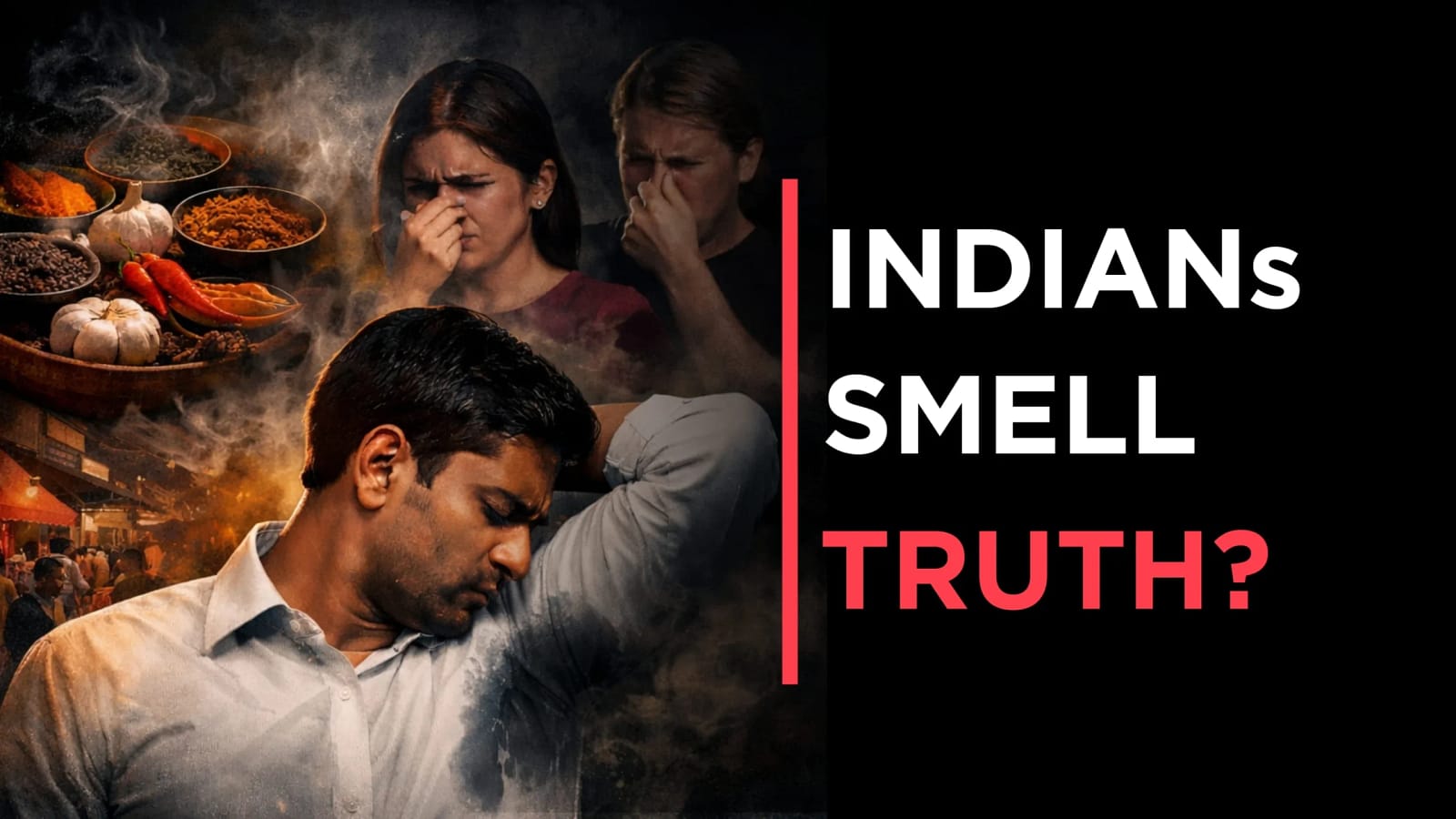
“Indians Smell” is a phrase that is often repeated online without proof or context. The claim about Indians’ body odor has become a trending stereotype on social media. But are these statements based on science, or are they driven by bias and misinformation? Before accepting the narrative, it is important to examine the facts calmly and logically.
Let us take a detailed look at whether the claim that Indians Smell has any real scientific basis. Many online comments about Indians Body Odor suggest it is linked to poor hygiene or not using deodorants, but body odor is actually caused by sweat mixing with bacteria on the skin. Climate, diet, clothing, and personal care habits can all influence natural scent. In this blog, we will examine facts carefully to understand whether this issue is based on science or misunderstanding.
What Is Body Odor? Why Is It Necessary?
Body odor is the natural smell that develops when sweat mixes with bacteria on the skin. Sweat helps cool the body and control temperature, which is necessary for survival. The odor itself is a normal biological process that happens to everyone. It is not linked to any nationality but to natural body functions and personal hygiene.
Scientific Factors Behind Body Odor
Body odor is mainly caused by sweat glands and skin bacteria. When sweat from apocrine glands mixes with bacteria, it creates a smell. Genetics, hormones, diet, and climate can also affect body scent. These scientific factors apply to all humans and are not limited to any specific group.

Why “Indians Smell” and “Indians Body Odor” Became Online Topics
The phrases Indians Smell and Indians Body Odor often trend because they are repeatedly used in online jokes and trolling. Social media algorithms amplify controversial or emotional content, which makes such phrases spread faster. When repeated often, these terms create a perception problem even without evidence. Over time, a normal human issue like body odor gets wrongly attached to a specific nationality through repetition and bias.
Body odor is not limited to one country or culture. People from Europe, America, Asia, Africa, and the Middle East all experience body odor because it is a natural human process. Different diets, climates, and hygiene habits can influence natural scent in every region. However, these differences are rarely turned into global stereotypes about other nations. This shows that the discussion is often shaped more by perception and bias than by biology.
What is “Indians Body Odor” and What Are the Reasons?

Factors Affecting Indians Body Odor
1. Hot and Humid Climate
Many regions in India experience high temperatures for most of the year. For example, cities like Mumbai or Chennai have humid weather that increases sweating. More sweat creates more chances for bacteria to produce body odor if hygiene is not maintained.
2. Spicy Diet
Indian meals often include garlic, onion, cumin, and other strong spices. After digestion, some compounds from these foods can be released through sweat. This may slightly change natural body scent, similar to how garlic affects people worldwide.
3. Public Transport and Crowded Spaces
Large populations mean crowded buses, trains, and markets. In packed environments with limited airflow, sweating increases. When many people sweat in close spaces, body odor can become more noticeable.
4. Deodorant and Antiperspirant Use
Not everyone uses deodorant daily, especially in rural or lower-income areas. Some people rely only on bathing instead of odor-control products. Without antiperspirants, sweat production remains high, which may lead to stronger smell.
5. Synthetic or Tight Clothing
Polyester and other synthetic fabrics trap heat and sweat. For example, wearing tight shirts in summer can increase moisture buildup. This environment allows bacteria to grow faster, which increases odor.
6. Cooking Smells on Clothes
Strong cooking aromas like fried spices or curry can cling to clothes and hair. If someone cooks daily without changing clothes, others may confuse food smell with body odor. This misunderstanding can shape the idea that Indians smell.
Food preparation styles can also influence perception, as explained in our analysis of food habits and long-term health effects.
7. Urban Stress and Long Work Hours
Long travel times and busy schedules can delay bathing or clothes changing. For example, daily commuters in metro cities may sweat for hours before reaching home. Extended sweat exposure can intensify natural body odor.
Role of Social Media in Spreading Stereotypes
Social media platforms play a major role in amplifying stereotypes. Short videos, memes, and comments using phrases like Indians Smell or Indians Body Odor are often shared for humor or shock value. Algorithms tend to promote content that creates strong reactions, which allows such narratives to spread quickly across countries. When repeated frequently, these phrases can shape public perception, even without scientific proof. Over time, online jokes can turn into widely accepted stereotypes, affecting how communities are viewed in real life.
Addressing Bias in Public Discussions
Public discussions about topics like Indians Smell or Indians Body Odor should be handled carefully and based on facts. Generalizing a natural human condition to an entire nationality reflects bias rather than science. It is important to separate individual hygiene issues from cultural identity. Balanced conversations reduce misunderstanding and prevent harmful stereotypes from spreading further.
| Common Claim | Evidence-Based Reality |
|---|---|
| Indians naturally smell bad | There is no scientific proof that any nationality has a natural body odor |
| Spicy food causes a permanent bad smell | Certain foods can temporarily influence body scent in all humans, regardless of country |
| It is a cultural hygiene problem | Hygiene varies by individual, not by ethnicity or nationality |
| More sweating means poor cleanliness | Sweat is a normal biological response; odor forms when bacteria break it down |
| The stereotype exists because it is true | Many similar stereotypes have historically targeted immigrant communities without evidence |

Suggestions to Control Our Body Odor
Bathe Regularly: Shower daily to remove sweat and bacteria that cause body odor.
- Body Wash (Men & Women):
Dove Deeply Nourishing Body Wash: https://amzn.to/4tNbGse
Chemist At Play Exfoliating Body Wash: https://amzn.to/3MQVAgl
Use Deodorant or Antiperspirant: Apply after bathing to reduce sweat and control odor throughout the day. You may try the deodorants listed below, as they are considered effective options.
- Deodorant for Women:
Skinn By Titan | Women : https://amzn.to/4aFt1KO
VANESA Babe, Queen: https://amzn.to/4rnyNYx - Deodorant for Men:
DENVER Hamilton, Caliber & Honour Deodorant : https://amzn.to/4qGUCkI
The Man Company Long Lasting Deodorant: https://amzn.to/4cFV7rI
Wear Clean, Breathable Clothes: Choose cotton fabrics and change clothes daily to prevent odor buildup.
Stay Hydrated: Drink enough water to help flush out odor-causing toxins from the body.
Maintain Oral Hygiene: Brush and floss daily to prevent bad breath and overall odor.
- Toothpaste:
Close Up Complete Fresh: https://amzn.to/4s2T0D7 - Mouthwash:
Colgate Plax Pepper: https://amzn.to/3Oma4p6
Wash Socks and Undergarments Daily: Fresh innerwear reduces bacterial growth in sweat-prone areas.
Keep Rooms Well Ventilated: Proper airflow helps reduce trapped sweat smell in living spaces.
For example, our detailed report on the health risks of sugar consumption explains how daily food choices can affect the body in different ways.
Conclusion
The discussion around Indians Body Odor and the phrase Indians Smell shows how easily stereotypes can spread online. Body odor is a natural human condition influenced by climate, diet, hygiene, and lifestyle — not nationality. Scientific evidence does not support the idea that any specific group naturally smells different.
Understanding the facts helps separate biology from bias. Responsible conversations and informed thinking are essential to prevent generalizations from turning into harmful stereotypes.
◆ Follow New2News for more fact-based insights and balanced discussions.
◆ Stay updated with clear, research-driven analysis.
◆ Read carefully, think critically, and share responsibly.