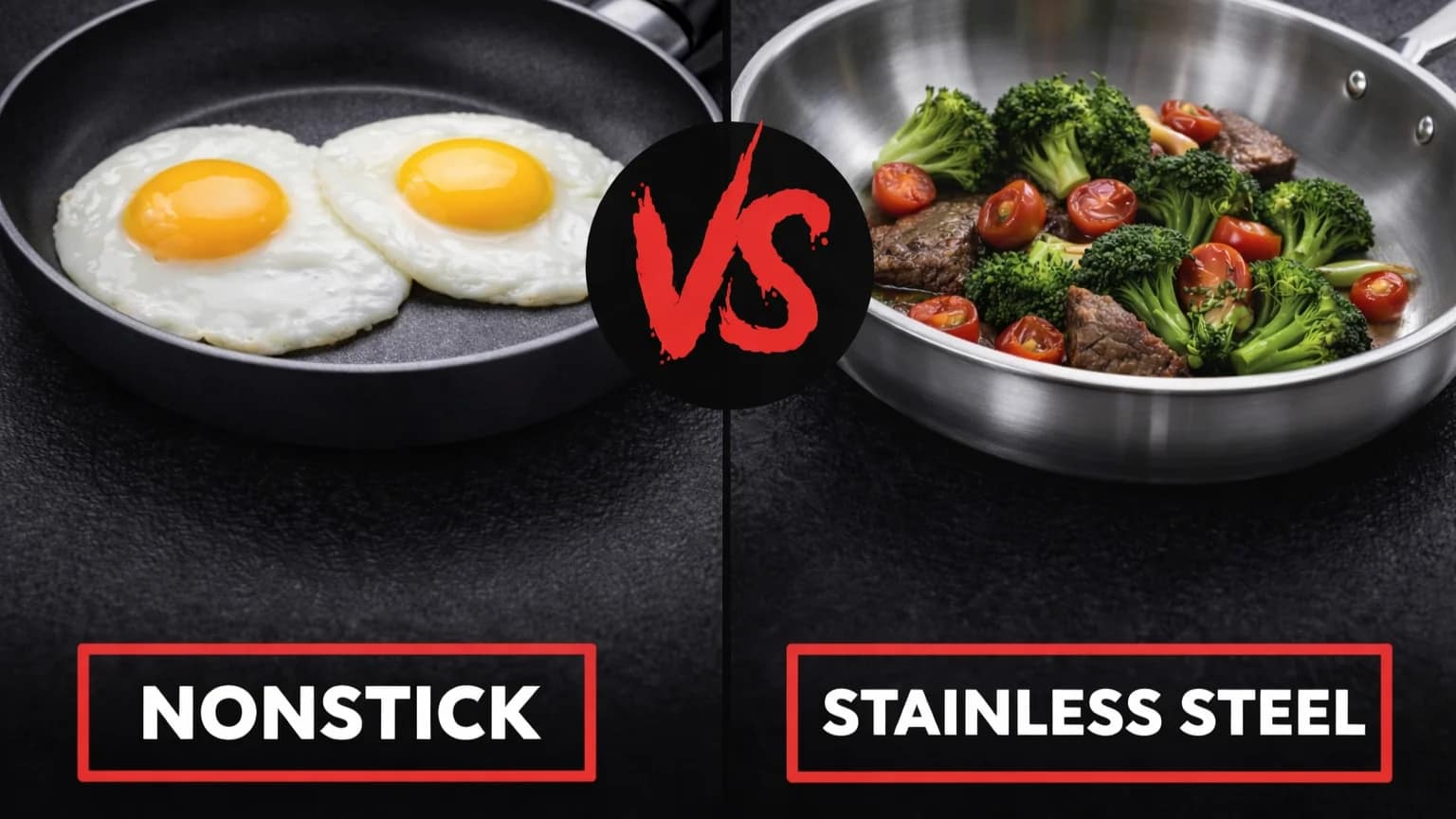
Choosing the right pan is not just about cooking. It is also about your health. Many people ask: Nonstick vs Stainless Steel and other metal pans, which option is safer for daily use?
In this article, we will clear all your confusion in a simple and honest way. We will go step by step and explain which cookware is safer and better for daily cooking. We will compare nonstick, stainless steel, and other common metal pans like cast iron and carbon steel. First, we will understand what each type is made of and how it works. Then we will look at safety, durability, and long-term health effects so you can choose the right utensil for your kitchen with confidence.

What Is Nonstick Cookware?
Nonstick cookware is usually made from aluminum or sometimes stainless steel as the base material. The cooking surface is coated with a synthetic chemical layer called PTFE (polytetrafluoroethylene), which creates a smooth, slippery finish that prevents food from sticking. During manufacturing, the metal pan is shaped first, then multiple layers of nonstick coating are applied and bonded to the surface using high heat. Older products once used a chemical called PFOA in the production process, but this has been removed from modern cookware in many countries due to safety concerns. Nonstick pans are popular because they need less oil and are easy to clean, but the coating can wear down over time if scratched or overheated.
What Is Stainless Steel Cookware?

Other Common Metal Cookware
Besides stainless steel, many kitchens also use cast iron, carbon steel, and aluminum pans. These materials are valued for their strong heat performance and durability. Each type has different safety, cooking behavior, and maintenance needs, which are important to understand when comparing Nonstick vs Stainless Steel and other cookware options for daily use.
Cast Iron Cookware
Cast iron cookware is made from molten iron poured into molds. It is heavy, very durable, and holds heat for a long time. When properly seasoned with oil, it forms a natural nonstick layer. Cast iron can last for decades but requires regular maintenance to prevent rust.
Aluminum Cookware
Aluminum cookware is lightweight and heats up quickly. Some aluminum pans are anodized, which makes the surface harder and more resistant to corrosion. While aluminum conducts heat well, untreated aluminum can react with acidic foods, so many modern versions include protective treatment.
Carbon Steel Cookware

Advantages and Disadvantages of Using Nonstick Cookware
Nonstick cookware is widely used in modern kitchens because it offers convenience and quick cooking. However, like any kitchen tool, it has both benefits and limitations. Understanding the advantages and disadvantages of nonstick cookware helps you decide whether it is suitable for your daily cooking needs.
Advantages of Nonstick Cookware
- Low oil cooking: Nonstick pans need very little oil or butter. This can help reduce extra fat in daily meals.
- Easy cleaning: Food does not stick strongly to the surface. Most pans can be cleaned with mild soap and a soft sponge.
- Lightweight design: Many nonstick pans are made with aluminum, which makes them lighter. They are easier to lift and handle.
- Quick heating: The aluminum base heats up faster than heavy metals. This saves time during cooking.
- Good for delicate foods: Eggs, pancakes, and soft foods cook smoothly. The surface prevents tearing or sticking.
| Nonstick Cookware | Stainless Steel Cookware |
|---|---|
| Has a PTFE chemical coating. | Made of metal alloy with no coating. |
| Best for low to medium heat. | Safe for high-heat cooking. |
| Needs less oil for cooking. | Requires moderate oil to prevent sticking. |
| Easy to clean and lightweight. | More durable and long-lasting. |
| Can release fumes if overheated. | Very stable at high temperatures. |
| Usually lasts 3–5 years. | Can last 10+ years with care. |
| Ideal for eggs and delicate foods. | Ideal for meat, browning, and searing. |
In the Nonstick vs Stainless Steel comparison, nonstick offers convenience and easy cleaning, while stainless steel provides stronger durability and better heat safety for long-term cooking.

Is Nonstick Safe and Healthy?
Health Benefits and Risks of Nonstick Cookware
| Health Benefits | Possible Health Risks |
|---|---|
| Requires less oil, which may reduce extra fat intake. | Overheating above 260°C (500°F) can release fumes. |
| Smooth surface prevents food from burning easily. | A scratched or peeling coating may reduce safety. |
| Easy cleaning reduces heavy scrubbing chemicals. | A short lifespan may lead to frequent replacement. |
| Modern pans are PFOA-free in many countries. | Poor ventilation during overheating may irritate. |
| Supports low-fat cooking methods. | Not suitable for very high-heat cooking. |
Myths About Nonstick Cookware
-
Myth: All nonstick pans are toxic.
Modern nonstick cookware is PFOA-free and safe at normal cooking temperatures. -
Myth: Nonstick always causes cancer.
There is no solid evidence when used properly under recommended heat limits. -
Myth: Any scratch makes food dangerous.
Minor scratches are not automatically harmful, but peeling pans should be replaced. -
Myth: Nonstick cannot be used on gas stoves.
It can be used safely with controlled, moderate heat. -
Myth: Nonstick is unhealthy.
It can support low-oil cooking when used correctly.
If you are considering upgrading your cookware, you can explore reliable nonstick pans designed for low to medium heat cooking. Choose models that are clearly labeled PFOA-free and suitable for daily use.
My personal recommendations are below, which i m using in my home for my family
Pigeon Nonstick Cookware Set: https://amzn.to/4rRxBwo
Lifelong Non-Stick Kadai: https://amzn.to/4rWLTvO
Amazon Solimo Non-Stick Kadhai : https://amzn.to/4roZaNX
Final Conclusion: Which Is Best for Daily Use
When comparing Nonstick vs Stainless Steel and other cookware, there is no single best choice for everyone. The right option depends on how you cook and what matters most to you.
For daily low to medium heat cooking like eggs and pancakes, nonstick is easy to use, needs less oil, and is simple to clean. It is safe when used at proper temperatures.
For high-heat cooking like searing and browning, stainless steel is a stronger and more durable option. Cast iron and carbon steel are also good for heavy cooking, but they need more care and seasoning.

- Best for gentle daily cooking: Nonstick
- Best for versatile all-purpose cooking and durability: Stainless steel
- Best for high-heat tasks and long life with maintenance: Cast iron / Carbon steel
Choosing cookware based on your typical cooking style ensures both safety and performance in everyday use.
✔ Follow us for clearer and practical health guides.
✔ Stay informed before making daily kitchen and food choices.
✔ Read smart, cook safe, and protect your health.