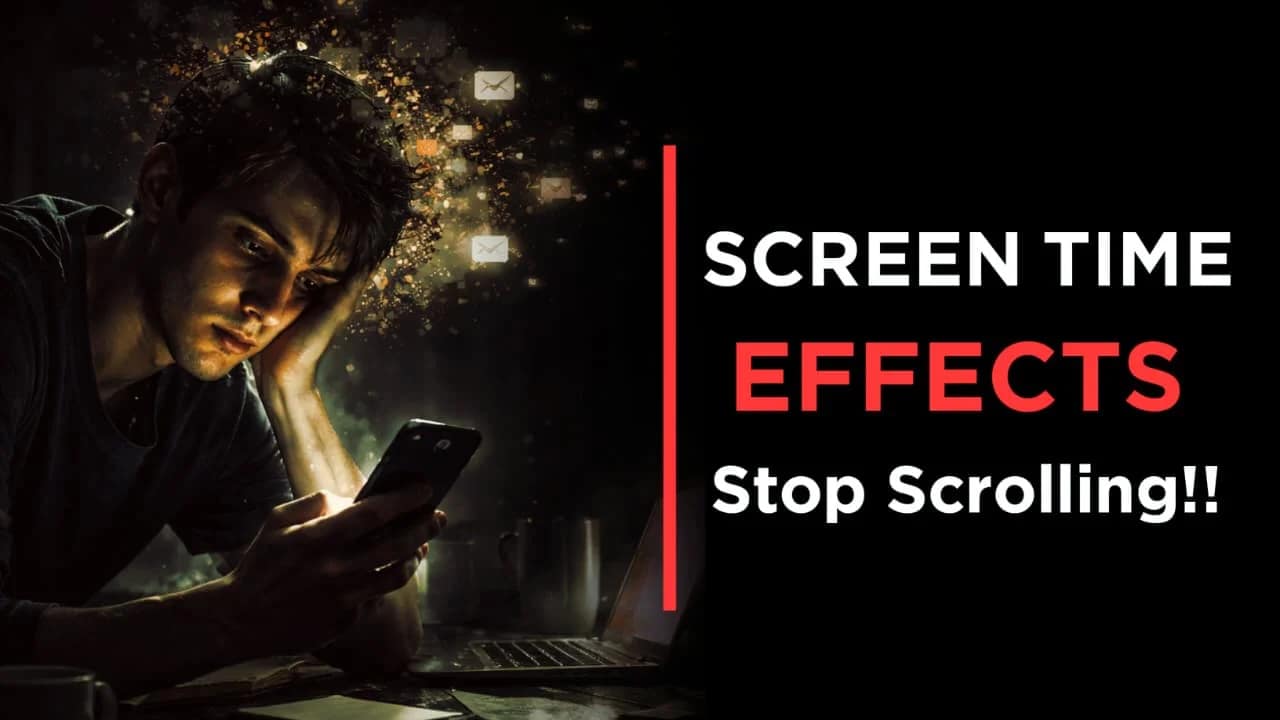
Screen time feels like an easy way to relax after a long day. But screen time effects can make your brain feel more tired instead of refreshed. What looks like simple scrolling may slowly use up your mental energy without you even realizing it.
In this article, we will understand what studies say about screen time effects and how scrolling affects your brain. We will also see how too much screen time can change your sleep, focus, and energy levels.
Here are four real examples from around the world that show screen time effects:
- In South Korea, doctors found many teens losing sleep and feeling tired every day because they spend hours scrolling and playing games on their phones before bed.
- In the United States, some college students reported trouble focusing on studies after long hours online, with many saying screen use made them feel worn out.
- In Australia, health reports linked heavy phone use to headaches and dry eyes in young people who looked at screens for too long without breaks.
- In the United Kingdom, some teens said too much scrolling made them feel anxious and stressed, especially when they compared their lives to what they saw online.
But the effects are not only seen in studies and reports. In daily life, screen time effects can lead to serious problems like poor sleep, low focus, weak eyesight, and even road accidents when people use phones while driving. These small habits can slowly turn into big health and safety risks.
How Screen Time Affects Your Brain During Scrolling
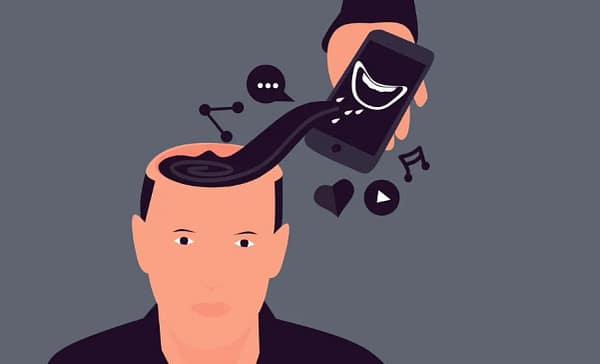
When you scroll on your phone, your brain does not rest. Screen time effects start working inside your brain right away. Every new post, video, or message gives your brain a small reward. This keeps your mind active and alert, even if you feel relaxed.
What happens inside your brain:
- Your brain releases dopamine, the “feel-good” chemical.
- You start wanting more new content again and again.
- Your focus becomes shorter over time.
- Your brain stays busy instead of calming down.
- You may feel tired after long scrolling.
In simple words, scrolling feels easy, but your brain is working the whole time. Over time, these effects of screen time can make you feel mentally tired and less focused.
Screen Time Effects, Information Overload, and Mental Fatigue
Social media feeds are full of images, text, videos, and strong emotions. Even if you scroll fast, your brain still tries to understand everything. This creates information overload. Your brain keeps processing new content every few seconds, especially when watching short videos like reels.
Over time, these effects of screen time can lead to mental fatigue. After 30 or 60 minutes of scrolling, you may feel tired or unable to focus. Unlike reading a book or having a calm talk, scrolling does not give your brain time to think or rest. It keeps your mind busy without a real break.
Mixed Content Overload: A Hidden Effect on Your Emotions
Online feeds show happy and sad content within minutes. You may see a funny video, then bad news, then someone’s success story, all in one session. Your brain keeps switching emotions again and again without rest.
These quick emotional changes can quietly stress your body. Even if you feel calm while scrolling, your nervous system may still react in the background. Over time, this screen time effect can make you feel anxious, tired, or emotionally drained. Too much scrolling can cause fast mood swings without you noticing. If screen time is not controlled, it can slowly affect your emotions and mental health.
Night Scrolling, Blue Light, and Sleep Problems from Screen Time Effects
Many people scroll on their phones before bed because it feels relaxing. But screen time effects can disturb your sleep. Smartphones give off blue light, which can lower melatonin, the hormone that helps you fall asleep.
When you scroll late at night, you may sleep later and not sleep deeply. Over time, poor sleep can make you feel tired, moody, and unfocused during the day.
| Screen Habit | Long-Term Effect |
|---|---|
| Quick scrolling | Mental tiredness |
| Watching mixed content | Mood swings and stress |
| Long hours on the phone | Low focus and brain fatigue |
| Night scrolling before bed | Poor sleep and morning tiredness |
| Constant notifications | Broken attention and burnout |
| Watching reels for long | Short attention span |
| Using a phone while eating | Less mindful habits |
Long-Term Screen Time Effects on Focus and Productivity
Over time, screen time effects can slowly weaken your focus and reduce your work quality. When your brain gets used to fast scrolling, it struggles with deep and steady thinking.
- Shorter Attention Span: You may find it hard to stay on one task for more than a few minutes. Your mind quickly looks for something new.
- Constant Phone Checking: You may check your phone again and again, even without a reason. This keeps breaking your focus.
- Slower Task Completion: Simple work may take more time than before. You feel busy but finish less.
- More Mistakes: When your focus is low, small errors increase. This can affect school or office work.
- Reduced Deep Thinking: Long reading or serious tasks may feel boring. Your brain prefers quick and short content instead.
Screen time effects can grow slowly, but they can also be reduced with simple habits. You do not need to stop using your phone completely. You just need better control and balance.
In the next section, we will look at easy and practical tips that can help protect your sleep, focus, mental health, and energy in daily life.
Managing Screen Time Effects in Daily Life
You do not need to remove your phone from your life. You just need better control. These simple tips can help reduce screen time effects and protect your focus and sleep.
Set a Fixed Daily Screen Limit
Do not scroll without control. Decide on a clear limit, like 30 or 45 minutes, for social media. Use a timer or phone settings to track your time. When the limit ends, stop immediately. This builds discipline and reduces screen time effects. Use timers for best time management.
Stopwatch Timer: https://amzn.to/3ZTJfuO
Stop Using Screens 1 Hour Before Bed
Create a “no-screen rule” before sleep. Keep your phone outside your bedroom if possible. This helps your brain calm down and improves sleep quality.
Turn Off Non-Essential Notifications
Every notification breaks your focus. Go to settings and disable alerts that are not important. Fewer interruptions mean better concentration.
Keep Your Phone Physically Away During Work
Do not just silence it. Place it in a drawer or another room while studying or working. Out of sight often means out of mind.
Follow the 20-20-20 Eye Rule
Every 20 minutes, look at something 20 feet away for 20 seconds. This reduces eye strain and mental fatigue. Blue light blocking glasses may help reduce eye strain and sleep disruption from late screen use.
LENSKART Blue light filter glasses: https://amzn.to/3OqrQYg
Create Daily “No-Phone Zones”
Do not use your phone while eating, talking to family, or exercising. Protect these moments from screen time effects.
Schedule One Full Offline Activity Daily
Read a book, go for a walk, talk to someone, or play a sport. Give your brain real rest without digital stimulation.
Small actions done daily can slowly reverse screen time effects and improve focus, sleep, and productivity.
Final Thoughts: Balance Is the Real Solution
Screen time effects are not always loud or sudden. They grow slowly through daily habits. Scrolling may feel relaxing, but too much of it can affect your sleep, focus, mood, and energy. The goal is not to fear technology, but to use it wisely. When you control your screen time, you protect your brain.
“Technology should serve you, not control you.”
Small changes today can protect your mind for years to come. Follow our New2News, your trusted treasure of practical content, for more simple tips, clear explanations, and real health truths. We share easy guidance to help you improve your lifestyle, protect your focus, and build better daily habits step by step.