Dating language has changed with time. Gen Z now uses new terms to describe relationships, emotions, and dating behaviour.
Gen Z relationships and dating terms refer to modern words used by young people to explain how relationships begin, change, or end. These terms are commonly seen on social media, dating apps, and online conversations.
The topic is in the news because these words are now part of everyday language, but many readers do not clearly understand their meaning. These terms affect teenagers, young adults, parents, and anyone trying to understand modern dating culture. Language used in relationships has changed with time. Among Gen Z, new words are now commonly used to describe dating behaviour, emotional patterns, and relationship status. These terms are widely seen on social media, messaging platforms, and dating apps.
This article explains Gen Z relationship terms and the types of relationships common among young people today, in clear and simple language.

Common Gen Z Relationship Terms
Benching
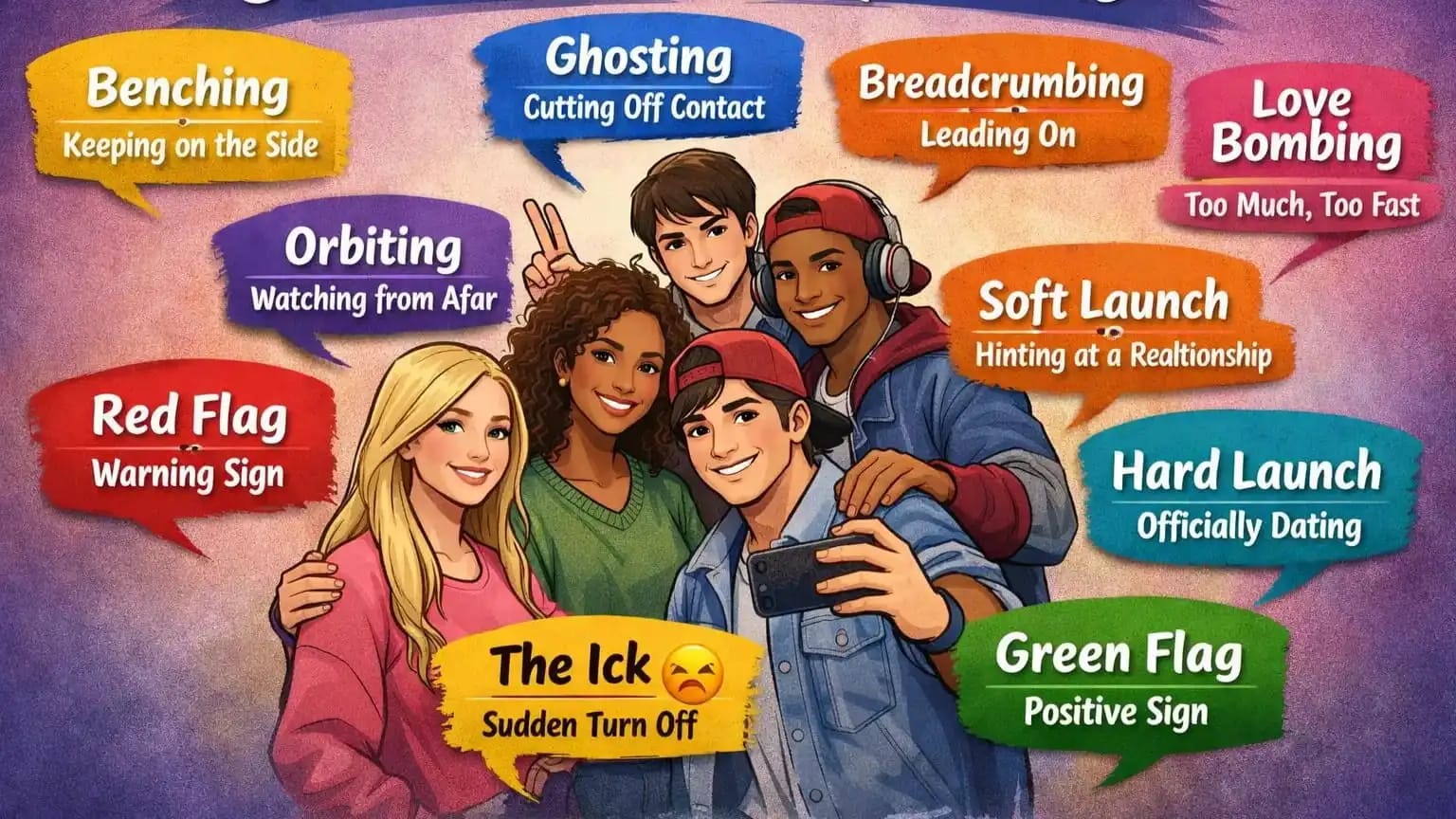
Benching means keeping someone as a backup option. There is no clear commitment in the relationship. Contact happens only when it is convenient.
Ghosting
Ghosting means suddenly stopping all communication. Messages and calls are ignored without any reason. No explanation or closure is given.
Breadcrumbing
Breadcrumbing means giving very little attention. Small messages are sent to keep interest alive. There is no serious plan to move forward.
Love Bombing
Love bombing means showing too much love very fast. Big promises are made at the start of the relationship. This attention often does not last long.
Orbiting
Orbiting happens when someone avoids direct replies. They still like to post or watch stories online. This creates confusion about their interest.
Soft Launch
A soft launch means hinting about a relationship online. The partner is not clearly shown or named. It is done in a subtle way.
Hard Launch
A hard launch means openly sharing a relationship. The partner is clearly shown on social media. There is no attempt to hide it.
Red Flag
A red flag is a warning sign in a relationship. It shows unhealthy or concerning behaviour. Such signs should not be ignored.
Green Flag
A green flag shows positive behaviour. It includes respect, honesty, and care. These signs indicate a healthy relationship.
The Ick
The ick is a sudden loss of attraction. It is caused by a small action or habit. Feelings change very quickly.

Types of Relationships Seen Among Gen Z
Situationship
A situationship is a close connection between two people. There is no clear relationship label. Feelings exist, but commitment is unclear.
Talking Stage
The talking stage is the early phase of communication. People are getting to know each other. Dating has not officially started yet.
Casual Dating
Casual dating means spending time together regularly. There is no long-term commitment involved. Both people keep things relaxed.
Exclusive but Not Official
This means dating only one person. The relationship is not announced publicly. There is no clear label yet.
Friends With Benefits
Friends with benefits is a friendship with physical involvement. There is no emotional commitment. Both people agree to keep it casual.
On-and-Off Relationship
An on-and-off relationship keeps ending and restarting. Breakups happen often. Problems are usually not fully resolved.
Long-Distance Relationship
A long-distance relationship happens when partners live far apart. Most communication is online. Meeting in person is less frequent.
One-Sided Relationship
A one-sided relationship has unequal effort. One person cares more emotionally. The other shows little interest.
Toxic Relationship
A toxic relationship causes stress or emotional pain. It may include control or disrespect. It affects mental well-being.
Healthy Relationship
A healthy relationship is based on trust and respect. Communication is open and honest. Both people feel safe and valued.
Body Count
Body count refers to the number of past romantic or sexual partners a person has had. The term is often discussed in modern dating conversations. Opinions about it can differ based on personal values and beliefs.
Gen Z relies heavily on digital communication. Online dating and social media have changed how relationships form and end. These terms help young people describe emotional experiences clearly and quickly. Understanding this language also helps parents, educators, and readers better understand modern dating culture.
Conclusion
Gen Z relationship terms reflect changing social behaviour and communication styles. While these words are informal, they describe real emotional experiences. Knowing these terms helps readers understand modern relationships and recognize healthy and unhealthy patterns.