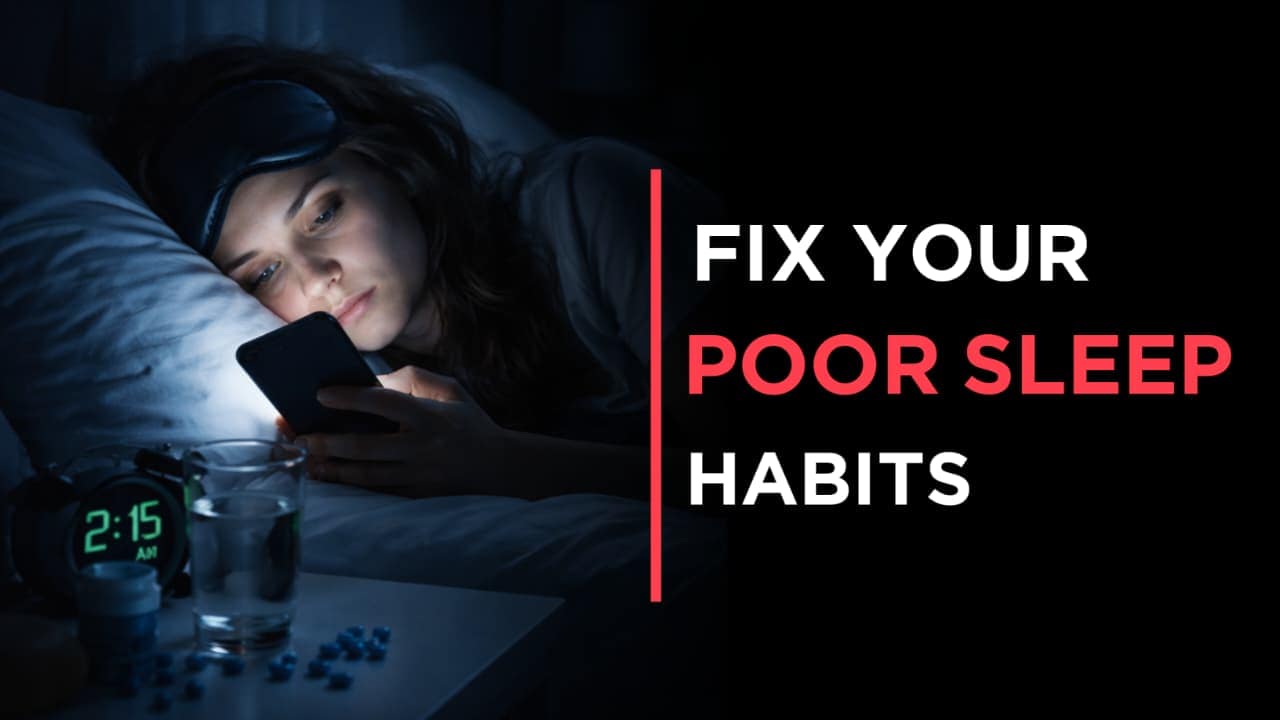
Sleep is not a luxury; it is a basic need. But many people follow poor sleep habits every day without knowing it. You may sleep for 7–8 hours and still wake up tired. The problem is often not the number of hours. The problem is your daily routine.
You came here to read this because you may also be facing sleep problems. Do not worry. Many people struggle with sleep, and small daily habits are often the reason. Let us understand the daily habits that destroy your sleep and how to fix them.
Why Sleep Is Necessary
Sleep is necessary because it helps your body and brain recover every day. While you sleep, your body repairs cells, balances hormones, and restores energy. Your brain also processes memories and clears waste. Without proper sleep, you may feel tired, irritated, unfocused, and weak. Good sleep keeps your mind clear, your mood stable, and your body healthy.
What Are Poor Sleep Habits?
Poor sleep habits are daily actions that disturb your natural sleep cycle. These habits may look small, but they slowly reduce your sleep quality over time.
Now, let us go through them one by one and understand how they silently affect your sleep health. Many of these habits do not harm you in one night, but they slowly confuse your body clock, reduce deep sleep, and leave you feeling tired even after many hours in bed.

Screen Time Before Bed Disrupts Sleep
Using your phone or TV before bed reduces melatonin, the hormone that helps you sleep. Blue light tells your brain to stay awake, making it harder to fall asleep. Stop screens 30–60 minutes before bed to protect your sleep. Blue light blocking glasses may help reduce eye strain and helps to sleep.
LENSKART Blue light filter glasses: https://amzn.to/3OqrQYg
If you want to understand how scrolling affects your brain and sleep cycle, read our article Screen Time Effects: Why Scrolling on Your Phone Drains Your Brain.
Link Between Caffeine, Late-Night Eating, and Poor Sleep
Coffee, tea, energy drinks, and cola contain caffeine, which can stay in your body for 6–8 hours and keep your brain alert at night. Late-night eating, especially heavy or spicy meals, can cause discomfort and acidity, disrupting deep sleep and your natural rest cycle. Read our detailed guide on sugar: Is Sugar Unhealthy?
Irregular Sleep Schedule and Its Effect on Sleep Patterns
Your body has a natural clock that works best with routine. Going to bed at different times, like 10 PM one day and 1 AM the next, confuses this clock and reduces sleep quality. This is one of the most common Poor Sleep Habits that slowly weakens your natural sleep rhythm. Long daytime naps can also reduce your need for sleep at night.
People who work night shifts may struggle even more because their schedule goes against the natural body rhythm. Over time, these Poor Sleep Habits can disturb deep sleep and leave you feeling tired even after many hours of rest.

Stress and Overthinking Affect Sleep
Stress and overthinking keep your nervous system active when it should be slowing down. When you worry about work, money, family, or plans at night, your body releases cortisol and adrenaline.
These hormones increase your heart rate, raise alertness, and delay the natural feeling of sleepiness. As a result, you may lie in bed awake, wake up frequently, or experience light, broken sleep. Creating a calm bedtime routine, avoiding serious discussions at night, and practicing slow breathing can help your body shift from alert mode to rest mode.
Sleeping in a Bright or Noisy Room
Light and noise tell your brain to stay alert rather than relax. Even small lights from TVs, chargers, or street lamps can disturb deep sleep and reduce sleep quality. Noise from traffic, fans, or talking can also break your natural sleep cycle.

Lack of Physical Activity
If you sit all day and do not move your body, you may not feel naturally tired at night. Your body needs regular movement to build healthy sleep pressure and signal that it is time to rest. Light exercise, walking, or stretching during the day can help improve sleep quality and make it easier to fall asleep.
Common Habits That Damage Sleep Quality
| Poor Sleep Habits | Impact and Suggested Solution |
|---|---|
| Late-night phone use | Reduces melatonin. Stop screens 30–60 minutes before bed. |
| Evening caffeine intake | Keeps the brain alert longer. Avoid caffeine after mid-afternoon. |
| Irregular sleep schedule | Disrupts the body clock. Sleep and wake at the same time daily. |
| Heavy late dinners | Causes discomfort and acidity. Eat light meals earlier in the evening. |
| Long daytime naps | Lowers nighttime sleep drive. Limit naps to 20–30 minutes. |
Health Risks Linked to Poor Sleep Habits
- Constant tiredness and low energy
- Poor focus and weak memory
- Mood swings and irritability
- Increased stress and anxiety
- Weakened immune system
- Higher risk of weight gain
- Increased risk of heart problems over time
- Reduced productivity at work or school
7 Practical Tricks and Lifestyle Changes to Improve Sleep
Improving sleep does not require big changes. Small daily habits and simple tricks can slowly reset your body clock and improve sleep quality.